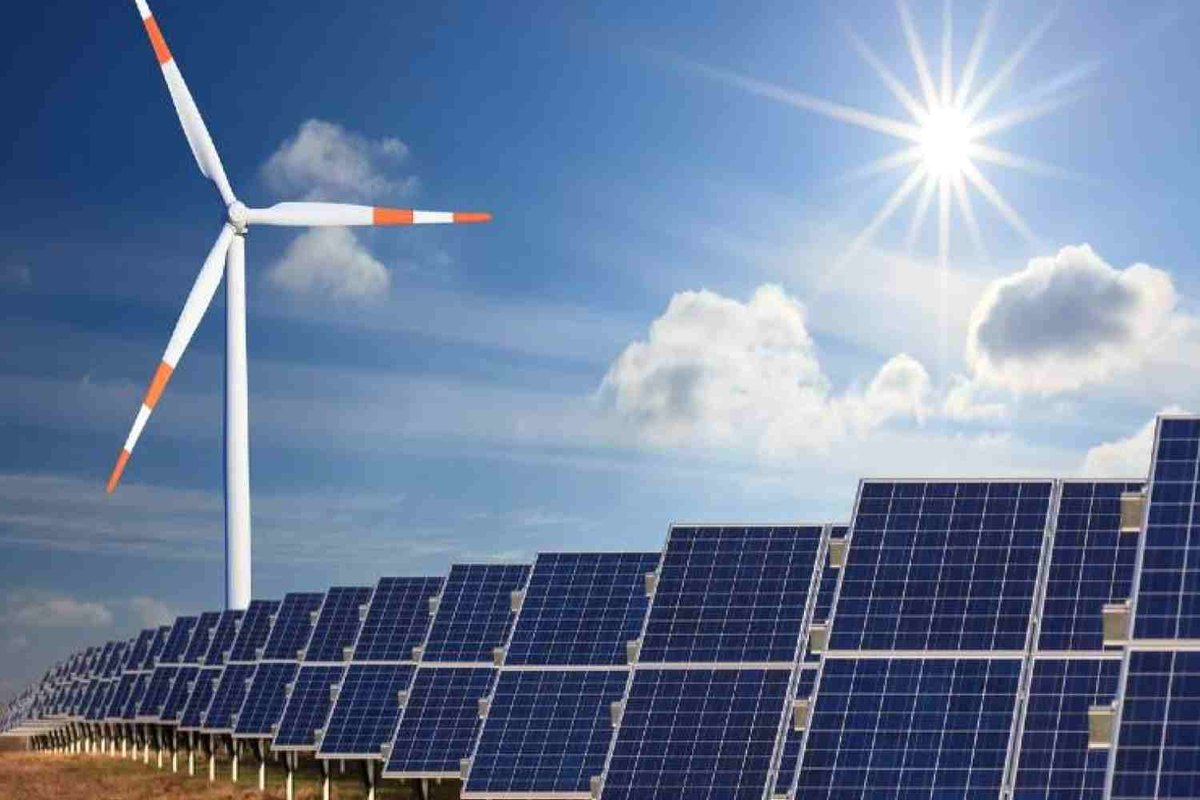
Imagine a future where your electricity comes from cleaner sources, your bills are lower, and the air you breathe is noticeably fresher. For residents across significant portions of Colorado, Wyoming, New Mexico, and Arizona, this vision isn't a distant dream—it's becoming a tangible reality, largely thanks to groundbreaking renewable energy projects in Tri-State areas. A monumental federal investment is propelling the Tri-State Generation and Transmission Association into a new era, fundamentally reshaping how power is produced and consumed across this expansive region.
This isn't just another energy plan; it's a blueprint for a sustainable future, backed by substantial federal support designed to catalyze a clean energy transition at an unprecedented scale.
At a Glance: Tri-State's Renewable Energy Leap
- Massive Federal Boost: Tri-State secured $2.5 billion in federal loans and grants from the USDA's New ERA program.
- Broad Reach: Serving one million consumers across Colorado, Wyoming, New Mexico, and Arizona.
- Key Goals: 10% reduction in electricity rates by 2034, $430 million in rural consumer benefits, 5.8 million tons annual climate pollution cut, and over 2,000 new jobs.
- Coal's Farewell: All remaining coal plants (Craig Station Units 1, 2, 3 and Springerville Station Unit 3) slated for retirement by 2031.
- Renewable Surge: Adding 1,250 MW of new renewables and storage by 2031, including significant wind, solar, and advanced battery solutions.
- Clean Energy Targets: Achieving 50% clean energy mix by 2025 and 70% by 2030 for member cooperatives.
- Financial Wins: Over $1.8 billion in cost savings for members through 2043.
- Policy Pioneer: Tri-State played a pivotal role in shaping the very federal programs that made this transition possible.
The Tri-State Blueprint: A New Era for Regional Power
For years, the energy landscape across the American West has been a complex tapestry of traditional fossil fuels and nascent renewable efforts. But now, a seismic shift is underway, largely spearheaded by organizations like the Tri-State Generation and Transmission Association. This not-for-profit wholesale power supplier, serving 42 member cooperatives across four states, has landed a $2.5 billion federal package from the Department of Agriculture’s Empowering Rural America (New ERA) program. This isn't just a grant; it's a strategic investment poised to redefine the energy future for a million consumers.
The sheer scale of this funding is transformative. It's earmarked to accelerate the retirement of existing coal plants and facilitate the rapid acquisition of new, clean renewable energy resources. The ripple effects promise to be profound, projecting a 10% reduction in electricity rates by 2034 and generating an estimated $430 million in direct benefits for rural consumers. Beyond the economic incentives, the environmental impact is equally compelling: a projected annual reduction of 5.8 million tons of climate pollution. And, crucially, this transition isn't just about shifting electrons; it's about shifting economies, with over 2,000 new jobs expected to be created. To truly grasp the scope of this transformation, it's worth taking a deeper dive into the operations and ambitions of Explore tri state generation and their critical role in this energy evolution.
Shifting Gears: The Grand Transition from Coal to Clean
The heart of Tri-State’s ambitious plan lies in a dual strategy: systematically retiring aging coal infrastructure while simultaneously building a robust, diverse portfolio of renewable energy and storage solutions. This transition isn't just about meeting regulatory targets; it's a proactive move towards a more resilient, cost-effective, and environmentally responsible power grid.
Phased Coal Plant Retirements
The era of coal-fired power plants is steadily drawing to a close for Tri-State. Their Electric Resource Plan (ERP), filed with the Colorado Public Utilities Commission (CoPUC), clearly outlines a phased retirement schedule for their remaining coal assets. Craig Station Unit 3 is set to cease operations in 2028, following the earlier retirements of Units 1 and 2 by December 31, 2025, and September 30, 2028, respectively. Looking further south, Arizona’s Springerville Station Unit 3 is slated for retirement by September 15, 2031, pending CoPUC approval. These dates mark definitive milestones in the journey away from fossil fuels, paving the way for cleaner alternatives. Understanding the intricacies involved in such massive infrastructure overhauls can be complex, and you can learn more about effective strategies for coal plant retirement in the modern energy landscape.
Powering Up with Renewables and Storage
As coal plants power down, a new generation of energy sources will power up. The federal funding directly supports Tri-State’s commitment to adding a substantial 1,250 megawatts (MW) of new renewable energy resources and sophisticated energy storage through 2031. This includes a diverse mix:
- Wind Power: 500 MW of standalone wind capacity.
- Hybrid Solutions: 200 MW of innovative wind/storage hybrids, blending intermittent generation with steady output.
- Dedicated Storage: 310 MW of pure storage capacity, featuring cutting-edge 100-hour iron air batteries for long-duration needs, along with more conventional 4-hour batteries and 4-hour batteries integrated with hybrids. This strategic deployment highlights the growing importance of advancements in utility-scale energy storage in stabilizing the grid.
- Solar Energy: 240 MW of new solar resources.
Beyond this new tranche, Tri-State had already announced an additional 595 MW of new solar capacity in 2020, which is scheduled to come online in 2024 and 2025. By 2031, these additions will bring Tri-State’s total system capacity to an impressive 920 MW of solar and 1,374 MW of wind. This significant shift underscores a clear commitment to harnessing the abundant renewable potential of the Western states.
Balancing the Grid: Reliability and Innovation
Transitioning from a traditional energy portfolio to one dominated by renewables is not without its challenges. Intermittent sources like wind and solar require careful management to ensure grid stability and reliability. Tri-State acknowledges this critical need and has incorporated strategic solutions into its plan.
To maintain unwavering reliability during this ambitious transition, particularly as large coal units are retired, Tri-State proposes a 290 MW combined-cycle natural gas unit slated for 2028. This serves as a bridge, offering flexible, on-demand power. Crucially, this unit is designed with the future in mind, with plans to incorporate carbon capture and sequestration (CCS) technology by 2031. CCS aims to capture carbon dioxide emissions from power plants and industrial facilities, preventing them from entering the atmosphere. While still evolving, the inclusion of CCS signals a commitment to mitigating the environmental footprint even of transitional fossil fuel assets, pointing toward the future of carbon capture and sequestration as a potential tool in the decarbonization toolkit.
Beyond the Megawatts: Economic and Environmental Impact
The impact of Tri-State's plan extends far beyond the technical specifications of power plants and transmission lines. It represents a significant step forward in combating climate change, fostering economic growth, and enhancing the quality of life for member communities.
First, the environmental wins are substantial. The strategy aims for an 89% reduction in greenhouse gas emissions in Colorado by 2030, benchmarked against a 2005 baseline. This aggressive target places Tri-State at the forefront of decarbonization efforts among utilities. Furthermore, the plan will dramatically increase the clean energy mix used by its members: reaching 50% by 2025 and an impressive 70% by 2030. These are not just aspirational goals; they are federally-funded commitments.
Economically, the benefits are equally compelling. Beyond the initial $430 million in direct benefits for rural consumers, the plan is expected to reduce overall costs to members by over $1.8 billion through 2043. This long-term cost savings, coupled with the creation of over 2,000 new jobs, demonstrates how a robust clean energy transition can be a powerful engine for regional economic development, attracting investment and fostering innovation.
The Federal Lifeline: How Policy Propelled Progress
The scale of Tri-State's transformation would not be possible without visionary federal policy. What’s particularly noteworthy is Tri-State's proactive role in shaping these very policies. The association was instrumental in developing the concept for the New ERA program in 2019, essentially helping to design the funding mechanism that would later benefit it.
Their influence didn't stop there. Tri-State also played a crucial role in advocating for rule changes that enabled direct-pay tax credits for not-for-profit cooperatives. This seemingly technical adjustment had a profound practical impact, facilitating the installation of 595 MW of solar capacity that otherwise might have faced significant financial hurdles. This demonstrates a powerful feedback loop: how energy providers can inform and shape federal initiatives, which, in turn, accelerate the transition to clean energy. Understanding these intricate relationships is key to appreciating federal funding mechanisms for renewable energy and their broader influence on the sector.
Smart Energy Consumption: The Role of Efficiency and Demand Response
While generating more clean energy is paramount, managing energy consumption intelligently is equally critical for a sustainable grid. Tri-State's Electric Resource Plan integrates demand-side management strategies to optimize energy use and reduce overall load.
The ERP incorporates specific energy efficiency targets for Colorado, encouraging consumers and businesses to reduce their electricity consumption through better insulation, more efficient appliances, and smart energy habits. Complementing this, a 4% demand response target is set for 2025. Demand response programs incentivize consumers to reduce their electricity usage during peak demand periods, thereby alleviating stress on the grid and often avoiding the need to fire up expensive, less efficient "peaker" plants. Tri-State is also actively identifying and implementing similar demand response and efficiency measures in New Mexico and Wyoming, ensuring a comprehensive, multi-state approach to smart energy management. For any utility looking to enhance grid stability and consumer savings, effective demand response programs in energy management are proving indispensable.
A Collaborative Future: Stakeholder Alignment
Achieving a transition of this magnitude requires broad consensus and collaboration across diverse interests. Tri-State's plan isn't a unilateral directive; it’s the product of extensive negotiation and alignment with a wide array of stakeholders. A key stipulation supporting the core elements of the plan has been reached with entities including:
- Mountain View Electric Association
- Otero County Electric Cooperative
- The Colorado Energy Office
- The Sierra Club
This impressive list of collaborators, spanning local utilities, state government agencies, and environmental advocacy groups, underscores the plan’s robust foundation and its capacity to address varying concerns. Such broad stakeholder buy-in is often the hallmark of successful, sustainable large-scale projects, demonstrating that economic progress and environmental stewardship can indeed go hand-in-hand when common ground is found.
What This Means for You: Practical Takeaways and the Road Ahead
The sweeping changes planned for renewable energy projects in Tri-State areas represent more than just corporate strategy; they are fundamental shifts that will touch millions of lives. For the consumer, this transition translates directly into tangible benefits: lower electricity bills in the long run, a cleaner environment, and a more stable, modern energy grid. For communities, it means new job opportunities and a stronger, more resilient local economy less dependent on volatile fossil fuel markets.
This journey is just beginning, with significant milestones slated over the next decade. As the coal plants retire and new wind, solar, and storage facilities come online, the landscape—both literally and energetically—will transform. Keep an eye on local news from your power cooperative, as these changes will likely be communicated directly to members as they unfold. Engage with local energy efficiency programs, consider demand response initiatives if available in your area, and watch for opportunities to participate in a cleaner, more affordable energy future. Tri-State's bold move, bolstered by federal support, serves as a powerful testament to what's possible when innovation meets vision and collaboration. The future of energy in the Tri-State region is bright, powered by renewables, and built on a foundation of foresight and commitment.